
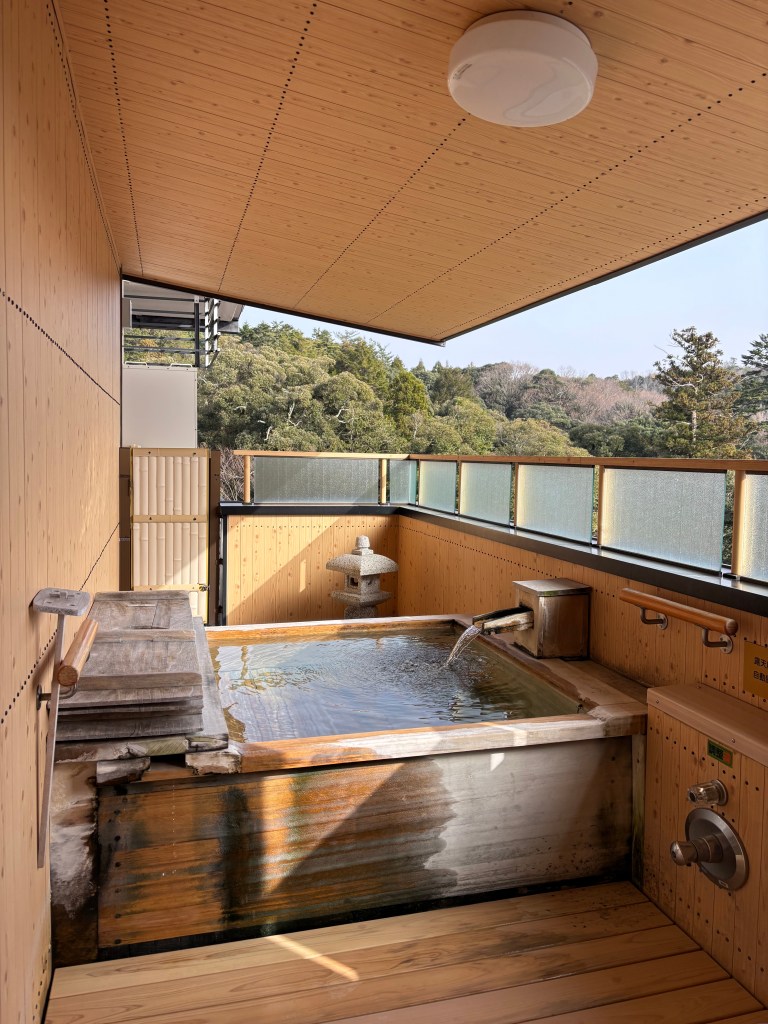
In the heart of Ishikawa Prefecture, the onsen town of Kaga offers a peaceful escape into one of Japan’s most cherished traditions: bathing in natural hot springs.
Onsen, or thermal springs, are found all around Japan thanks to the archipelago’s volcanic activity that sends bubbling heated water to Earth’s surface. Onsen aren’t popular just for the soothing waters; they’re also believed to have therapeutic properties like relieving tension, easing muscle pain, and promoting circulation. The onsen are usually part of an inn (ryokan) where guests can book a room, enjoy the baths and traditional Japanese cooking.
Intrigued by the promise of deep relaxation and cultural immersion, my husband and I booked a stay at Tachibana Shikitei, a four-star ryokan, during our honeymoon in Japan. We arrived at Kaga Onsen Station and were picked up by a complimentary shuttle that whisked us through green farming fields to the ryokan. At the entrance, we were greeted by Himari, a middle-aged woman in a teal kimono, who would be our host throughout the stay. The lobby was lined with tatami mats, and Himari instructed us to leave our shoes at the entrance—where they stayed for the rest of our visit.
Himari escorted us up to our room where our luggage had already been deposited inside the door. As we settled in, she served us matcha and anko, a typical dessert made with mochi and red bean paste.
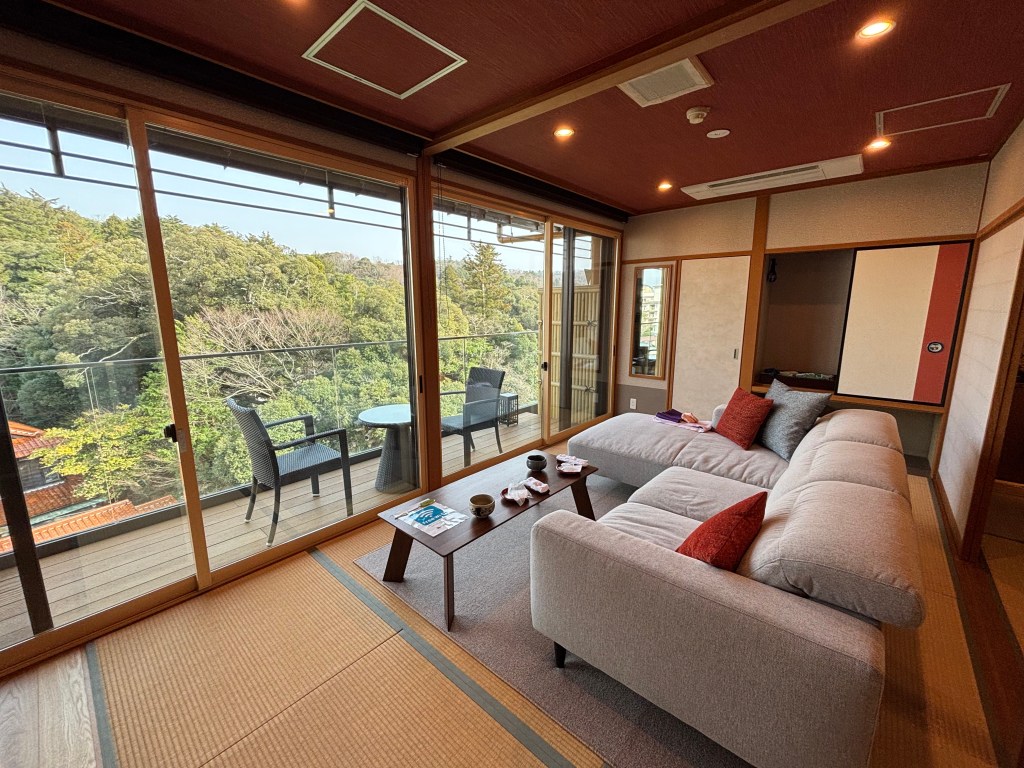
Our suite was a fusion between traditional and luxury amenities: tatami floors, sliding shoji doors, a large lounge area, two King size beds and floor-to-ceiling windows that overlooked a local shrine. But the real highlight was the private terrace with an open-air cedar bath and massage chair.

Bathing in an onsen is as much about ritual as it is about relaxation. Guests must wash thoroughly before entering the water, are separated by gender, and bathing suits are not allowed in public baths. Traditional onsen also often restrict entry to guests with tattoos. However many ryokan, like Tachibana Shikitei, offer suites with private outdoor baths.
Insider Tips for First-Time Onsen Visitors
- Onsen Etiquette: Always rinse before entering, don’t splash or swim, and avoid bringing towels into the water.
- What to Wear: Yukata robes are provided and appropriate for all areas of the ryokan, including breakfast and dinner.
- Tattoos: Many onsen restrict access for those with tattoos due to lingering cultural stigma. Private onsen are a comfortable alternative.
- Language Barrier: Staff often speak limited English but are exceptionally gracious—learn a few phrases or use Google Translate for easy communication.
Before dinner, I took a dip in the onsen and the fatigue from days of exploring Tokyo and Kanazawa on foot melted away. The water cascading into the tub created a beautiful, peaceful symphony that soothed my mind and allowed me to sink into this slower pace of life–if only for one night.
I was feeling quite relaxed by the time Himari returned to dress my husband and I in yukatas (traditional cotton robes worn after bathing) for dinner. I chose one with pink cherry blossoms and Himari tied a purple obi belt around my waist in a perfect bow. The robe was snug around my legs so I shuffled down the hall to our private dining room for a kaiseki feast.

Kaiseki is a traditional multi-course Japanese meal featuring high-quality seasonal ingredients and impeccable presentation. Ours began with small appetizers such as root vegetables meticulously carved into a butterfly and sashimi. Our main plate was a flaky white fish and mashed potatoes steamed in vapor. We selected an upgrade including tender, melt-in-your-mouth nodo beef, which we grilled ourselves over a small flame along with fresh vegetables. We also ordered a bottle of sake that was smooth to drink and paired well with the variety of flavors in each dish. Between courses, Himari served us palate-cleansing soups and tea.The meal ended on a sweet note with a light, airy parfait.
After dinner, we made our way to the bar, where I sipped plum wine and a local pianist performed a set of classical music—the perfect way to unwind after a large meal and quiet my mind before bed time.
The next morning began with another quiet soak in our private onsen as steam rose gently from the bath. At breakfast we were served a typical Japanese breakfast in the same private dining room as the night before. Japanese breakfasts are savory and nourishing, and ours was no exception. We started with a selection of fermented and pickled veggies with steamed rice before we moved on to chicken meatball soup, a soft boiled egg, miso soup with clams, fish we grilled over coals, a fresh lettuce salad with a sweet citrus dressing, and a delicious fruit salad. Just like the night before, every dish was an edible artform.
Before we knew it, it was noon—time to check out of this serene sanctuary and return to the fast-paced rhythm of our trip walking miles a day between Shinto shrines and Buddhist temples. For honeymooners, weary travelers, or anyone in need of deep relaxation, a stay at a ryokan delivers not only comfort but an authentic glimpse into Japanese culture.
Staying at Tachibana Shikitei
Where: Tachibana Shikitei (shikitei.com/english), Kaga, Ishikawa Prefecture, Japan
How to Get There from Kanazawa: Approximately 45 minutes by train from Kanazawa Station to Kaga Onsen Station. Shuttle pickup available with reservation.
Highlights: Private and public onsen baths, kaiseki dining, tatami-style suites, nightly musical performances.
Good to Know: Book suites with private baths if you’re new to onsen culture or have tattoos. Public baths require nudity and pre-bathing etiquette.


 Halley Rogers